Tuesday, April 24, 2012

Stop Online Piracy Act or S.O.P.A


The Stop Online Piracy Act (SOPA) is a United States bill introduced by U.S. Representative Lamar S. Smith (R-TX) to expand the ability of U.S. law enforcement to fight online trafficking in copyrighted intellectual property and counterfeit goods. Provisions include the requesting of court orders to bar advertising networks and payment facilities from conducting business with infringing websites, and search engines from linking to the sites, and court orders requiring Internet service providers to block access to the sites. The law would expand existing criminal laws to include unauthorized streaming of copyrighted content, imposing a maximum penalty of five years in prison. A similar bill in the U.S. Senate is titled the PROTECT IP Act (PIPA).
Proponents of the legislation state it will protect the intellectual-property market and corresponding industry, jobs and revenue, and is necessary to bolster enforcement of copyright laws, especially against foreign websites. Claiming flaws in present laws that do not cover foreign-owned and operated sites, and citing examples of "active promotion of rogue websites" by U.S. search engines, proponents assert stronger enforcement tools are needed.
Opponents state the proposed legislation threatens free speech and innovation, and enables law enforcement to block access to entire internet domains due to infringing content posted on a single blog or webpage. They have raised concerns that SOPA would bypass the "safe harbor" protections from liability presently afforded to Internet sites by the Digital Millennium Copyright Act. Library associations have expressed concerns that the legislation's emphasis on stronger copyright enforcement would expose libraries to prosecution. Other opponents state that requiring search engines to delete a domain name could begin a worldwide arms race of unprecedented censorship of the Web and violates the First Amendment.
On January 18, 2012, the English Wikipedia, Reddit, and an estimated 7,000 other smaller websites coordinated a service blackout, to raise awareness. In excess of 160 million people viewed Wikipedia's banner. Other protests against SOPA and PIPA included petition drives, with Google stating it collected over 7 million signatures, boycotts of companies that support the legislation, and a rally held in New York City.
In response to the protest actions, the Recording Industry Association of America (RIAA) stated, "It's a dangerous and troubling development when the platforms that serve as gateways to information intentionally skew the facts to incite their users and arm them with misinformation", and "it's very difficult to counter the misinformation when the disseminators also own the platform."
The sites of several pro-SOPA organizations such as RIAA, CBS.com, and others were slowed or shut down with denial of service attacks started on January 19. Self-proclaimed members of the "hacktivist" group Anonymous claimed responsibility and stated the attacks were a protest of both SOPA and the United States Department of Justice's shutdown of Megaupload on that same day.
Opponents of the bill have proposed the Online Protection and Enforcement of Digital Trade Act (OPEN) as an alternative.On January 20, 2012, House Judiciary Committee Chairman Smith postponed plans to draft the bill: "The committee remains committed to finding a solution to the problem of online piracy that protects American intellectual property and innovation ... The House Judiciary Committee will postpone consideration of the legislation until there is wider agreement on a solution."
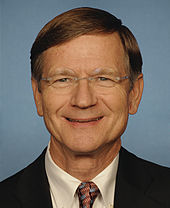
Rep. Lamar Smith (R-TX) who introduced the SOPA bill.Bill 3261 or H.R. 3261, is a proposed law that was introduced in the United States House of Representatives on October 26, 2011, by House Judiciary Committee Chair Representative Lamar S. Smith (R-TX) and a bipartisan group of 12 initial co-sponsors.[5] Presented to the House Judiciary Committee, it builds on the similar PRO-IP Act of 2008 and the corresponding Senate bill, the PROTECT IP Act (PIPA).
The originally proposed bill would allow the U.S. Department of Justice, as well as copyright holders, to seek court orders against websites outside U.S. jurisdiction accused of enabling or facilitating copyright infringement[clarification needed]. A court order requested by the DOJ could include barring online advertising networks and payment facilitators from conducting business with websites found to infringe on federal criminal intellectual-property laws, barring search engines from linking to such sites, and requiring Internet service providers to block access to such sites.
The bill establishes a two-step process for intellectual property-rights holders to seek relief if they have been harmed by a site dedicated to infringement. The rights holder must first notify, in writing, related payment facilitators and ad networks of the identity of the website, who, in turn, must then forward that notification and suspend services to that identified website, unless that site provides a counter notification explaining how it is not in violation. The rights holder can then sue for limited injunctive relief against the site operator, if such a counter notification is provided, or if the payment or advertising services fail to suspend service in the absence of a counter notification.
The second section covers penalties for streaming video and for selling counterfeit drugs, military materials, or consumer goods. The bill would increase penalties and expand copyright offenses to include unauthorized streaming of copyrighted content and other intellectual-property offenses. The bill would criminalize unauthorized streaming of copyrighted content, with a maximum penalty of five years in prison for ten such infringements within six months.
The bill provides immunity from liability to the ad and payment networks that comply with this Act or that take voluntary action to sever ties to such sites. Any copyright holder who knowingly misrepresents that a website is involved in copyright infringement would be liable for damages.
Supporters include the Motion Picture Association of America, pharmaceuticals makers, media businesses, and the United States Chamber of Commerce. They state it protects the intellectual-property market and corresponding industry, jobs and revenue, and is necessary to bolster enforcement of copyright laws, especially against foreign websites.They cite examples such as Google's $500 million settlement with the Department of Justice for its role in a scheme to target U.S. consumers with ads to illegally import prescription drugs from Canadian pharmacies.
Opponents state that it violates the First Amendment, is Internet censorship, will cripple the Internet, and will threaten whistle-blowing and other free speech actions.
In October, 2011, co-sponsor Representative Bob Goodlatte (R-VA), chairman of the House Judiciary Committee's Intellectual Property sub-panel, told The Hill that SOPA is a rewrite of the Senate's bill that addresses some tech-industry concerns, noting that under the House version of the legislation copyright holders won't be able to directly sue intermediaries such as search engines to block infringing websites and would instead need a court's approval before taking action against third parties.

Monday, April 23, 2012

Madness as you know, is like gravity. All it takes is a little push "The Joker"

You want to know how I got these scars? My father was a drinker and a fiend and one night he goes off crazier than usual. Mommy gets the kitchen knife to defend herself. He doesn’t like that, not one bit. So, me watching he takes the knife to her, laughing while he does it. He turns to me and he says “WHY SO SERIOUS!?”. He comes at me with the knife “WHY SO SERIOUS SON!?” Sticks the blade in my mouth "lets put a smile on that face!"


Even though he's just a character in a movie or comic book,i want to meet him in a person and laugh with all my madness and fear.The Joker is a fictional character, a comic book supervillain published by DC Comics. He is the archenemy of Batman, having been directly responsible for numerous tragedies in Batman's life, including the paralysis of Barbara Gordon and the death of Jason Todd, the second Robin. Created by Jerry Robinson, Bill Finger and Bob Kane, the character first appeared in Batman #1 (Spring 1940).
Throughout his comic book appearances, the Joker is portrayed as a master criminal whose characterization has varied. The original and currently dominant image is of a highly intelligent psychopath with a warped, sadistic sense of humor, while other writers have portrayed him as an eccentric prankster. Similarly, throughout the character's long history, there have been several different origin tales; they most commonly depict him as falling into a tank of chemical waste, which bleaches his skin white and turns his hair green and his lips bright red, giving him the appearance of a clown. He has been repeatedly analyzed by critics as the perfect adversary for Batman. Their long, dynamic relationship often parallels the concept of yin and yang.
The Joker has been portrayed by Cesar Romero in the Batman television series, Jack Nicholson in Tim Burton's Batman, and Heath Ledger in Christopher Nolan's The Dark Knight, which posthumously earned Ledger the Academy Award for Best Supporting Actor. Larry Storch, Frank Welker, Mark Hamill, Kevin Michael Richardson, Jeff Bennett, Corey Burton, John DiMaggio, and Brent Spiner have provided the voice for the character in animated form.
As one of the most iconic and recognized villains in popular media, The Joker was ranked #1 on Wizard's list of the 100 Greatest Villains of All Time.He was also named #2 on IGN's list of the Top 100 Comic Book Villains of All Time List, was ranked #8 on the Greatest Comic Book Characters in History list by Empire (being the highest ranking villain on the list) and was listed as the fifth Greatest Comic Book Character Ever in Wizard magazine's 200 Greatest Comic Book Characters of all Time list, also the highest villain on the list.On their list of the 100 Greatest Fictional Characters, Fandomania.com ranked the Joker at number 30.

The Joker commits crimes with comedic weapons such as a deck of bladed playing cards, an acid-squirting flower, cyanide-stuffed pies, exploding cigars filled with nitroglycerin, harpoon guns that utilize razor-sharp BANG!-flags, and a lethally electric joy buzzer. His most prominent weapon is his Joker venom, a deadly poison that infects his victims with a ghoulish rictus grin as they die while laughing uncontrollably. The venom comes in many forms, from gas to darts to liquid poison, and has been his primary calling card from his first appearance. The Joker is immune to every known venom as well as to his own laughing toxin; in Batman #663, Morrison writes that "being an avid consumer of his products, the Joker's immunity to poisons has been built up over years of dedicated abuse".
The Joker is portrayed as highly intelligent and skilled in the fields of chemistry and engineering, as well an expert with explosives. From his first appearance onward, he has been consistently portrayed as capable of hijacking broadcasts - usually news programs - of both the television and radio varieties. In a miniseries featuring Tim Drake, the third Robin, the Joker is shown kidnapping a computer genius, and admitting that he doesn't know much about computers, although later writers have portrayed him as very computer literate.
The Joker's skills in unarmed combat vary considerably depending on the writer. Some writers have shown Joker to be a very skilled fighter, capable of holding his own against Batman in hand-to-hand combat. His versatility in combat is due in part to his own extensive array of hidden gadgets and weapons on his person that he often pulls out on a moment's whim (rolling a handful of explosive marbles on the ground, retractable knives attached to his spats, etc.); other writers, on the other hand, prefer portraying Joker as physically frail to the point that he can be defeated with a single punch. He is, however, consistently described as agile. Joker's skills in combat also differ in the film and television adaptations.
The Joker has cheated death numerous times, even in seemingly inescapable and lethal situations. He has been seen caught in explosions, been shot repeatedly, dropped from lethal heights, electrocuted, and so on, but he always returns once again to wreak havoc.
Over several decades there have been a variety of depictions and possibilities regarding the Joker's apparent insanity. Grant Morrison's graphic novel Arkham Asylum: A Serious House on Serious Earth suggests that the Joker's mental state is in fact a previously unprecedented form of "super-sanity," a form of ultra-sensory perception. It also suggests that he has no true personality of his own, that on any given day he can be a harmless clown or a vicious killer, depending on which would benefit him the most. Later, during the Knightfall saga, after Scarecrow and the Joker team up and kidnap the mayor of Gotham City, Scarecrow turns on the Joker and uses his fear gas to see what Joker is afraid of. To Scarecrow's surprise, the gas has no effect on Joker, who in turn beats him with a chair. In Morrison's JLA, the Martian Manhunter, trapped in a surreal maze created by the Joker, used his shape-shifting abilities to reconfigure his own brain to emulate the Joker's chaotic thought patterns. Later in the same storyline, Martian Manhunter uses his telepathic powers to reorganize the Joker's mind and create momentary sanity, albeit with great effort and only temporarily. In those few moments, the Joker expresses regret for his many crimes and pleads for a chance at redemption. However, during Batman: Cacophony, the Joker is again rendered sane when he is dosed up on painkillers after being fatally wounded by Onomatopoeia, and, during a subsequent conversation with Batman, although expressing regret for the loss that motivated Batman to never allow people to die if he could help it, informs the Dark Knight that he does not hate Batman because he is crazy, but is crazy because he hates him, stating that he will only "retire" when Batman is dead.
In Elseworlds: Distant Fires, the Joker is rendered sane by a nuclear war that deprives all super beings of their powers. In Batman: Legends of the Dark Knight #145, the Joker became sane when Batman put him in one of Ra's al Ghul's Lazarus Pits after being shot, a reversal of the insanity which may come after experiencing such rejuvenation. However, the sanity is only temporary, and soon the Joker is reverted back to his "normal" self.
The character is sometimes portrayed as having a fourth wall awareness. In Batman: The Animated Series,the Joker is the only character to talk directly into the "camera" and can be heard whistling his own theme music in the episode adaptation of the comic Mad Love. Also, in the episode "Joker's Wild", he says into the camera, "Don't try this at home, kids!" In the DC vs. Marvel crossover, he also demonstrates knowledge of the first Batman/Spider-Man crossover even though that story's events did not occur in the canonical history of either the Marvel or DC universe. On page five of "Sign of the Joker", the second half of the "Laughing Fish" storyline, the Joker turns the page for the reader, bowing and tipping his hat in mock politeness.

the most saddest time of apocalyptic fiction


Apocalyptic fiction is a sub-genre of science fiction that is concerned with the end of civilization due to a potentially existential catastrophe such as nuclear warfare, pandemic, extraterrestrial attack, impact event, cybernetic revolt, technological singularity, dysgenics, supernatural phenomena, divine judgement, climate change, resource depletion, zombies or some other general disaster. Post-apocalyptic fiction is set in a world or civilization after such a disaster. The time frame may be immediately after the catastrophe, focusing on the travails or psychology of survivors, or considerably later, often including the theme that the existence of pre-catastrophe civilization has been forgotten (or mythologized). Post-apocalyptic stories often take place in an agrarian, non-technological future world, or a world where only scattered elements of technology remain. There is a considerable degree of blurring between this form of science fiction and that which deals with dystopias.
The genres gained in popularity after World War II, when the possibility of global annihilation by nuclear weapons entered the public consciousness. However, recognizable apocalyptic novels have existed at least since the first quarter of the 19th century, when Mary Shelley's The Last Man was published.Additionally, the subgenres draw on a body of apocalyptic literature, tropes, and interpretations that are millennia old.

Numerous societies, including the Babylonian and Judaic traditions, have produced apocalyptic literature and mythology, some of which dealt with the end of the world and of human society.The scriptural story of Noah and his Ark describes the end of a corrupt civilization and its replacement with a remade world. The first centuries AD saw the creation of various apocalyptic works; the best known (due to its inclusion in the New Testament) is the Book of Revelation (from which the word apocalypse originated, meaning "revelation of secrets"), which is replete with prophecies of destruction.In the study of religious works, apocalyptic texts or stories, are those that disclose hidden secrets either by taking an individual literally into the heavens or into the future. Most often these revelations about heaven and the future are used to explain why some currently occurring event is taking place.
Outside of the corpus of New Testament apocrypha also includes apocalypses of Peter, Paul, Stephen, and Thomas, as well as two of James and Gnostic Apocalypses of Peter and Paul. The beliefs and ideas of this time, including apocalyptic accounts excluded from the Bible, influenced the developing Christian eschatology.[citation needed]
Further apocalyptic works appeared in the early Middle Ages. The 7th century Apocalypse of Pseudo-Methodius includes themes common in Christian eschatology; the Prophecy of the Popes has been ascribed to the 12th century Irish saint Malachy, but could possibly date from the late 16th century. Islamic eschatology, related to Christian and Jewish eschatological traditions, also emerged from the 7th century. Ibn al-Nafis's 13th century Theologus Autodidactus, an Arabic novel, used empirical science to explain Islamic eschatology

Philosophy of Mind


Philosophy of mind is the branch of philosophy that studies the nature of the mind, mental events, mental functions, mental properties, consciousness and their relationship to the physical body. The mind-body problem, i.e. the relationship of the mind to the body, is commonly seen as the central issue in philosophy of mind, although there are other issues concerning the nature of the mind that do not involve its relation to the physical body.
Dualism and monism are the two major schools of thought that attempt to resolve the mind-body problem. Dualism is the position that mind and body are in some way separate from each other. It can be traced back to Plato,Aristotle and the Samkhya and Yoga schools of Hindu philosophy,but it was most precisely formulated by René Descartes in the 17th century.Substance dualists argue that the mind is an independently existing substance, whereas Property dualists maintain that the mind is a group of independent properties that emerge from and cannot be reduced to the brain, but that it is not a distinct substance.
The 20th century philosopher Martin Heidegger suggested that subjective experience and activity (i.e. the "mind") cannot be made sense of in terms of Cartesian "substances" that bear "properties" at all (whether the mind itself is thought of as a distinct, separate kind of substance or not). This is because the nature of subjective, qualitative experience is incoherent in terms of – or semantically incommensurable with the concept of – substances that bear properties. This is a fundamentally ontological argument.

Which attributes make up the mind is much debated. Some psychologists argue that only the "higher" intellectual functions constitute mind, particularly reason and memory. In this view the emotions—love, hate, fear, joy—are more primitive or subjective in nature and should be seen as different from the mind as such. Others argue that various rational and emotional states cannot be so separated, that they are of the same nature and origin, and should therefore be considered all part of what we call the mind.
In popular usage mind is frequently synonymous with thought: the private conversation with ourselves that we carry on "inside our heads." Thus we "make up our minds," "change our minds" or are "of two minds" about something. One of the key attributes of the mind in this sense is that it is a private sphere to which no one but the owner has access. No one else can "know our mind." They can only interpret what we consciously or unconsciously communicate.

Broadly speaking, mental faculties are the various functions of the mind, or things the mind can "do".
Thought is a mental activity which allows human beings to make sense of things in the world, and to represent and interpret them in ways that are significant, or which accord with their needs, attachments, goals, commitments, plans, ends, desires, etc. Thinking involves the symbolic or semiotic mediation of ideas or data, as when we form concepts, engage in problem solving, reasoning and making decisions. Words that refer to similar concepts and processes include deliberation, cognition, ideation, discourse and imagination.
Thinking is sometimes described as a "higher" cognitive function and the analysis of thinking processes is a part of cognitive psychology. It is also deeply connected with our capacity to make and use tools; to understand cause and effect; to recognize patterns of significance; to comprehend and disclose unique contexts of experience or activity; and to respond to the world in a meaningful way.
Memory is the ability to preserve, retain, and subsequently recall, knowledge, information or experience. Although memory has traditionally been a persistent theme in philosophy, the late nineteenth and early twentieth centuries also saw the study of memory emerge as a subject of inquiry within the paradigms of cognitive psychology. In recent decades, it has become one of the pillars of a new branch of science called cognitive neuroscience, a marriage between cognitive psychology and neuroscience.
Imagination is the activity of generating or evoking novel situations, images, ideas or other qualia in the mind. It is a characteristically subjective activity, rather than a direct or passive experience. The term is technically used in psychology for the process of reviving in the mind percepts of objects formerly given in sense perception. Since this use of the term conflicts with that of ordinary language, some psychologists have preferred to describe this process as "imaging" or "imagery" or to speak of it as "reproductive" as opposed to "productive" or "constructive" imagination. Things that are imagined are said to be seen in the "mind's eye". Among the many practical functions of imagination are the ability to project possible futures (or histories), to "see" things from another's perspective, and to change the way something is perceived, including to make decisions to respond to, or enact, what is imagined.
Consciousness in mammals (this includes humans) is an aspect of the mind generally thought to comprise qualities such as subjectivity, sentience, and the ability to perceive the relationship between oneself and one's environment. It is a subject of much research in philosophy of mind, psychology, neuroscience, and cognitive science. Some philosophers divide consciousness into phenomenal consciousness, which is subjective experience itself, and access consciousness, which refers to the global availability of information to processing systems in the brain.Phenomenal consciousness has many different experienced qualities, often referred to as qualia. Phenomenal consciousness is usually consciousness of something or about something, a property known as intentionality in philosophy of mind.

Nuclear explosion

A nuclear explosion occurs as a result of the rapid release of energy from an intentionally high-speed nuclear reaction. The driving reaction may be nuclear fission, nuclear fusion or a multistage cascading combination of the two, though to date all fusion based weapons have used a fission device to initiate fusion, and a pure fusion weapon remains a hypothetical device.
Atmospheric nuclear explosions are associated with mushroom clouds, although mushroom clouds can occur with large chemical explosions, and it is possible to have an air-burst nuclear explosion without these clouds. Nuclear explosions produce radiation and radioactive debris.
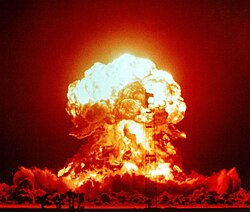
"A 23 kiloton tower shot called BADGER, fired on April 18, 1953 at the Nevada Test Site, as part of the Operation Upshot-Knothole nuclear test series."

In 1963, the United States, Soviet Union, and United Kingdom signed the Limited Test Ban Treaty, pledging to refrain from testing nuclear weapons in the atmosphere, underwater, or in outer space. The treaty permitted underground tests. Many other non-nuclear nations acceded to the Treaty following its entry into force; however, three nuclear weapons states have not acceded: France, China, and North Korea.
The primary application to date has been military (i.e. nuclear weapons). However, there are other potential applications, which have not yet been explored, or have been considered but abandoned. They include
Nuclear pulse propulsion, including using a nuclear explosion as asteroid deflection strategy.
Nuclear weapons are largely seen as a 'deterrent' by most governments; the sheer scale of the destruction caused by a nuclear weapon has prevented much serious consideration of their use in warfare.

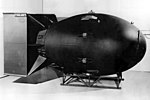
In the history of warfare, two nuclear weapons have been detonated—both by the United States in World War II. The first event occurred on the morning of 6 August 1945, when the United States dropped a uranium gun-type device code-named "Little Boy" on the Japanese city of Hiroshima. The second event occurred three days later when, again, the United States dropped a plutonium implosion-type device code-named "Fat Man" on the city of Nagasaki. These bombings resulted in the immediate deaths of around 120,000 people and more over time, because of the nuclear radiation. The use of these weapons was and remains controversial. (See Atomic bombings of Hiroshima and Nagasaki for a full discussion).

Ku Klux Klan as we know the KKK


Ku Klux Klan, often abbreviated KKK and informally known as the Klan, is the name of three distinct past and present far-rightorganizations in the United States, which have advocated extremist reactionary currents such as white supremacy, white nationalism, and anti-immigration, historically expressed through terrorism.Since the mid-20th century, the KKK has also been anti-communist.The current manifestation is splintered into several chapters with no connections between each other; it is classified as a hate group.It is estimated to have between 3,000 and 5,000 members as of 2012.
The first Klan flourished in the South in the late 1860s, then died out by the early 1870s. Members adopted white costumes: robes, masks, and conical hats, designed to be outlandish and terrifying, and to hide their identities.The second KKK flourished nationwide in the early and mid 1920s, and adopted the same costumes and code words as the first Klan, while introducing cross burnings.The third KKK emerged after World War II and was associated with opposing the Civil Rights Movement and progress among minorities. The second and third incarnations of the Ku Klux Klan made frequent reference to the USA's "Anglo-Saxon" and "Celtic" blood, harking back to 19th-century nativism and claiming descent from the original 18th-century British colonial revolutionaries.The first and third incarnations of the Klan have well-established records of engaging in terrorism and political violence, though historians debate whether or not the tactic was supported by the second KKK.

The first Klan was founded in 1865 in Pulaski, Tennessee, by six veterans of the Confederate Army.They named it after the Greek word kuklos, which means circle. The name means "Circle of Brothers."
Although there was no organizational structure above the local level, similar groups arose across the South, adopting the name and methods. Klan groups spread throughout the South as an insurgent movement during the Reconstruction era in the United States. As a secret vigilante group, the Klan targeted freedmen and their allies; it sought to restore white supremacy by threats and violence, including murder, against black and white Republicans. In 1870 and 1871, the federal government passed the Force Acts, which were used to prosecute Klan crimes. Prosecution of Klan crimes and enforcement of the Force Acts suppressed Klan activity. In 1874 and later, however, newly organized and openly active paramilitary organizations, such as the White League and the Red Shirts, started a fresh round of violence aimed at suppressing blacks' voting and running Republicans out of office. These contributed to segregationist white Democrats regaining political power in all the Southern states by 1877.

A significant characteristic of the second Klan was that it was an organization based in urban areas, reflecting the major shifts of population to cities in both the North and the South. In Michigan, for instance, 40,000 members lived in Detroit, where they made up more than half of the state's membership. Most Klansmen were lower- to middle-class whites who were trying to protect their jobs and housing from the waves of newcomers to the industrial cities: immigrants from southern and eastern Europe, who tended to be Catholic and Jewish in numbers higher than earlier groups of immigrants; and black and white migrants from the South. As new populations poured into cities, rapidly changing neighborhoods created social tensions. Because of the rapid pace of population growth in industrializing cities such as Detroit and Chicago, the Klan grew rapidly in the U.S. Midwest. The Klan also grew in booming Southern cities such as Dallas and Houston.
In the medium-size industrial city of Worcester, Massachusetts in the 1920s, the Klan ascended to power quickly but diminished as a result of opposition from the Catholic Church. There was no violence and the local newspaper ridiculed Klansmen as "night-shirt knights". Half of the members were Swedish American, including some first-generation immigrants. The ethnic and religious conflicts between Worcester residents is discussed. Swedish Protestants fought against Irish Catholics for political and ideological control of the city.
For some states, historians have obtained membership rosters of some local units and matched the names against city directory and local records to create statistical profiles of the membership. Big city newspapers were often hostile and ridiculed Klansmen as ignorant farmers. Detailed analysis from Indiana showed the rural stereotype was false for that state:
Indiana's Klansmen represented a wide cross section of society: they were not disproportionately urban or rural, nor were they significantly more or less likely than other members of society to be from the working class, middle class, or professional ranks. Klansmen were Protestants, of course, but they cannot be described exclusively or even predominantly as fundamentalists. In reality, their religious affiliations mirrored the whole of white Protestant society, including those who did not belong to any church.
The Klan attracted people but most of them did not remain in the organization for long. Membership in the Klan turned over rapidly as people found out that it was not the group they wanted. Millions joined, and at its peak in the 1920s, the organization included about 15% of the nation's eligible population. The lessening of social tensions contributed to the Klan's decline.
Soviet propaganda poster (Freedom, American style, 1950, by Nikolay Dolgorukov and Boris Efimov), showing the KKK's lynchings of blacks.

Electromagnetic pulse

An electromagnetic pulse (sometimes abbreviated EMP) is a burst of electromagnetic radiation. The abrupt pulse of electromagnetic radiation usually results from certain types of high energy explosions, especially a nuclear explosion, or from a suddenly fluctuating magnetic field. The resulting rapidly-changing electric fields and magnetic fields may couple with electrical/electronic systems to produce damaging current and voltage surges.
In military terminology, a nuclear warhead detonated hundreds of kilometers above the Earth's surface is known as a high-altitude electromagnetic pulse (HEMP) device. Effects of a HEMP device depend on a very large number of factors, including the altitude of the detonation, energy yield, gamma ray output, interactions with the Earth's magnetic field, and electromagnetic shielding of targets.

The fact that an electromagnetic pulse is produced by a nuclear explosion was known since the earliest days of nuclear weapons testing. The magnitude of the EMP and the significance of its effects, however, were not realized for some time.
During the first United States nuclear test on 16 July 1945, electronic equipment was shielded due to Enrico Fermi's expectation of an electromagnetic pulse from the detonation. The official technical history for that first nuclear test states, "All signal lines were completely shielded, in many cases doubly shielded. In spite of this many records were lost because of spurious pickup at the time of the explosion that paralyzed the recording equipment." During British nuclear testing in 1952–1953 there were instrumentation failures that were attributed to "radioflash", which was then the British term for EMP.
The high altitude nuclear tests of 1962, as described below, increased the awareness of EMP beyond the original small population of nuclear weapons scientists and engineers. The larger scientific community became aware of the significance of the EMP problem after a series of three articles were published about nuclear electromagnetic pulse in 1981 by William J. Broad in the weekly publication Science.


In 1962, the Soviet Union also performed a series of three EMP-producing nuclear tests in space over Kazakhstan, which were the last in the series called "The K Project".Although these weapons were much smaller (300 kiloton or 1.3 PJ) than the Starfish Prime test, since those tests were done over a populated large land mass (and also at a location where the Earth's magnetic field was greater), the damage caused by the resulting EMP was reportedly much greater than in the Starfish Prime nuclear test. The geomagnetic storm–like E3 pulse (from the test designated as "Test 184") even induced an electric current surge in a long underground power line that caused a fire in the power plant in the city of Karaganda. After the collapse of the Soviet Union, the level of this damage was communicated informally to scientists in the United States. Formal documentation of some of the EMP damage in Kazakhstan exists but is still sparse in the open scientific literature.
How the peak EMP on the ground varies with the weapon yield and burst altitude. The yield here is the prompt gamma ray output measured in kilotons. This varies from 0.115–0.5% of the total weapon yield, depending on weapon design. The 1.4 Mt total yield 1962 Starfish Prime test had a gamma output of 0.1%, hence 1.4 kt of prompt gamma rays. (The blue 'pre-ionisation' curve applies to certain types of thermonuclear weapon, where gamma and x-rays from the primary fission stage ionise the atmosphere and make it electrically conductive before the main pulse from the thermonuclear stage. The pre-ionisation in some situations can literally short out part of the final EMP, by allowing a conduction current to immediately oppose the Compton current of electrons).